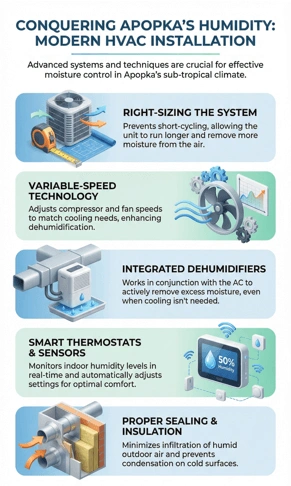
In Apopka’s moisture-heavy climate, humidity control isn’t something that happens after an HVAC system is installed—it’s engineered into the system from the very beginning. Based on hands-on installation experience in Central Florida homes, modern HVAC systems manage humidity through precise load calculations, variable-speed operation, and airflow tuning that targets moisture removal, not just temperature control.
This page explains how today’s HVAC installations in Apopka are intentionally designed to pull excess humidity out of the air, why installer expertise is critical to getting it right, and how a properly set up system helps prevent mold, protect indoor air quality, and maintain long-term comfort while using less energy.
Quick Answers
HVAC Installation in Apopka
HVAC installation in Apopka must be designed for humidity control first, cooling second. In Central Florida’s moisture-heavy climate, properly sized systems, variable-speed technology, and airflow calibration are essential to remove excess humidity, protect indoor air quality, and maintain long-term comfort—making installation quality more important than the equipment brand itself.
Top Takeaways
Installation controls humidity. Setup matters more than the brand.
Correct sizing is critical. Longer run times remove more moisture.
Modern systems manage moisture better. Variable-speed tech improves comfort.
Good airflow protects air quality. Reduces mold, odors, and uneven cooling.
Knowledge leads to better results. Informed homeowners make smarter HVAC decisions.
How Modern HVAC Installation Controls Humidity in Apopka Homes
In Apopka’s hot, moisture-heavy climate, effective humidity control is built into the HVAC system during installation—not added later. Modern installations begin with precise load calculations to avoid oversized equipment that cools too quickly and leaves moisture behind. Properly sized systems run longer, steadier cycles, allowing the evaporator coil to remove humidity more effectively.
Today’s HVAC systems also rely on variable-speed compressors and blower motors, which are configured during installation to slow airflow when humidity is high. This increases moisture removal while maintaining consistent temperatures throughout the home. Just as important, installers balance ductwork and airflow to keep the system operating within optimal conditions, preventing excess moisture, musty odors, and uneven comfort.
When paired with smart thermostats and humidity-focused settings, these installation decisions work together to deliver a home that feels cooler, drier, and healthier year-round—proving that in Apopka, humidity control starts with how the system is installed, not just the equipment itself.

“After installing HVAC systems across Central Florida, we’ve seen that humidity control is won or lost at installation—not at the thermostat. When a system is sized, balanced, and calibrated specifically for Apopka’s climate, it doesn’t just cool the home; it actively manages moisture to protect comfort, air quality, and long-term performance.”
Essential Resources on HVAC Installation in Apopka
Getting HVAC installation right in Apopka isn’t just about staying cool—it’s about protecting your home from excess humidity, improving indoor air quality, and making smart, long-term choices for your family. These carefully selected resources help you understand what really matters before moving forward, so you can make confident, informed decisions with clarity—not guesswork.
Florida HVAC Codes That Protect Your Home
Florida HVAC Installation Codes – Built for Safety, Efficiency, and Comfort
This resource outlines Florida’s HVAC building codes, helping homeowners understand the standards that ensure systems are installed safely, efficiently, and to code.
https://bcapcodes.org/florida/hvac-installation-codes/
The Science Behind Proper HVAC System Design
ACCA Manuals (J, S, D) – Why Correct Sizing and Airflow Matter
These industry-standard design guides explain how professionals calculate system size, select equipment, and design ductwork—critical steps for effective humidity control and energy efficiency.
https://calcwizards.com/florida-hvac-design-energy-code-compliance/
Manufacturer-Approved Installation Standards
Carrier-Certified HVAC Installers in Apopka – Installation Done the Right Way
A directory of factory-certified installers who follow manufacturer best practices, helping ensure reliable performance, proper setup, and full warranty protection.
https://www.carrier.com/residential/en/us/dealers/fl/apopka/2502-vulcan-rd-8009-loc/hvac-installation
Permits, Inspections, and Energy Compliance
Florida HVAC Permits Guide – What Must Happen Before Installation
This guide breaks down Florida’s permitting and inspection requirements so homeowners know what should be approved before any HVAC system is installed.
https://autohvac.ai/permits/states/florida
HVAC Codes Explained for Homeowners
Florida Residential HVAC Requirements – Clear, Plain-Language Guidance
A homeowner-friendly explanation of HVAC efficiency standards, installation rules, and what to expect from a professional contractor—without the technical overwhelm.
https://www.heatpumppricesreviews.com/residential-hvac-code-requirements-florida-homeowners/
Humidity Control in Florida Homes
HVAC Humidity Control Strategies – What Your System Should Be Doing
A climate-specific look at how HVAC systems manage moisture in humid regions like Apopka, helping homeowners recognize the difference between cooling air and truly controlling humidity.
https://schnackel.com/blogs/hvac-humidity-control-4-tactics-for-the-florida-environment
Supporting Statistics
1. Healthy indoor humidity range:
The U.S. Environmental Protection Agency (EPA) recommends keeping indoor humidity between 30%–50% to reduce mold growth and support healthier indoor air quality.
Source: https://www.epa.gov/indoor-air-quality-iaq/care-your-air-guide-indoor-air-quality
2. Humidity and mold prevention:
The Centers for Disease Control and Prevention (CDC) advises maintaining indoor humidity at 50% or lower to help prevent mold and moisture-related health issues.
3. Cooling’s impact on home energy use:
The U.S. Energy Information Administration (EIA) reports that air conditioning accounts for 19% of residential electricity use in U.S. homes, underscoring why proper system sizing and humidity control matter for long-term efficiency.
Source: https://www.eia.gov/energyexplained/use-of-energy/electricity-use-in-homes.php
Final Thought & Opinion
In Apopka’s humid climate, HVAC installation success is measured by more than temperature—it’s measured by how well the system manages moisture every day. Research shows that healthy indoor air depends on proper humidity control, correct system sizing, and installation decisions made specifically for Florida conditions.
From first-hand experience working in Central Florida homes, the difference between average comfort and lasting comfort almost always comes down to installation quality—not the equipment brand.
The best HVAC installations in Apopka share three traits:
Humidity is prioritized during installation, not treated as an afterthought.
Systems are sized and balanced correctly, allowing longer run times for better moisture removal.
Airflow and controls are fine-tuned to keep the home dry, comfortable, and energy-efficient.
Our opinion is simple: when HVAC systems are installed with Apopka’s humidity in mind, they work quietly in the background—protecting indoor air quality, improving comfort, and giving homeowners confidence that their system is truly working for them, not against them.
Next Steps
Use these simple steps to move forward with confidence when planning HVAC installation in Apopka:
Check your comfort level
Look for signs of high humidity: clammy air, musty odors, uneven cooling, or constant thermostat changes.Confirm proper system sizing
Ask if a Manual J load calculation is used to size your system for Apopka’s climate.Ask about humidity control setup
Make sure airflow, variable-speed settings, and thermostat controls are configured to manage moisture—not just temperature.Verify permits and code compliance
Ensure required permits are pulled and Florida energy codes are followed.Get a post-installation walkthrough
Have your installer explain system settings, humidity controls, and maintenance basics.Protect long-term performance
Replace filters regularly, schedule routine maintenance, and monitor indoor humidity.
FAQ on “HVAC Installation in Apopka”
Q: Why does HVAC installation in Apopka require a different approach?
A:
Humidity is the primary challenge, not heat alone.
Systems must be installed to remove moisture, not just cool air.
Longer run times and controlled airflow improve comfort.
Q: How can I tell if my HVAC system is sized correctly?
A:
A Manual J load calculation should be performed.
Oversized systems cool fast but leave homes damp.
Proper sizing results in steady temperatures and lower humidity.
Q: Which HVAC features matter most in Apopka’s climate?
A:
Variable-speed compressors and blowers.
Slower airflow improves moisture removal.
Smart controls help balance cooling and humidity.
Q: Are permits required for HVAC installation in Apopka?
A:
Yes, permits and inspections are required.
They ensure compliance with Florida energy and safety codes.
Inspections help catch sizing and airflow issues early.
Q: How does installation quality affect indoor air quality?
A:
Proper airflow reduces moisture buildup.
Better humidity control lowers mold risk.
Correct installation supports cleaner, healthier indoor air.
Here is the nearest branch location serving the Pembroke Pines FL area…
Proper airflow reduces moisture buildup.
Better humidity control lowers mold risk.
Correct installation supports cleaner, healthier indoor air.
Filterbuy HVAC Solutions - Weston FL
2573 Mayfair Ln, Weston, FL 33327, United States
(754) 296-3528